
Soft, Fluffy Sorghum Bread (Gluten-Free, Dairy-Free)
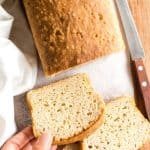
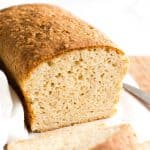
Incredibly soft, tender and fluffy, this easy sorghum bread is perfect for making sandwiches or toast. We love spreading it with homemade jam, or making avocado toast with it. Totally gluten-free and dairy-free, but no one would know. You’ll be making this delicious yeast bread recipe on repeat, so bake a loaf or two and freeze to enjoy homemade bread anytime!

Want to save this recipe?
Enter your email & I’ll send it to your inbox. Plus, get great new recipes from me every week!
Homemade Bread is the Best
I’m a BIG fan of making homemade bread – and at least once a week, we bake a loaf of bread.
Sometimes we bake quick breads such as this super popular easy honey oat bread, this low-carb almond flour bread, or this easy coconut flour bread.
Other times we bake yeast breads such as this favorite soft gluten-free white bread, this tender brown rice bread, or this fluffy buckwheat bread, or this tasty rosemary focaccia bread.
Mostly, I’m always testing and developing new bread recipes to try, because baking bread is my passion. And this time, we’re making sorghum flour bread.

What is Sorghum?
If you’ve never heard of sorghum (also known as ‘jowar’) before, here’s a quick background of this grain.
An ancient cereal grain that belongs to the Poaceae plant family, sorghum is the fifth most-produced cereal crop in the world.
Although it is still relatively uncommon in the western world, sorghum is highly popular in Australia, India and other Southeast Asian countries.
Is Sorghum Gluten-Free?
Given that sorghum is naturally gluten-free, it makes it a great grain alternative for those with Celiac disease or have gluten intolerances or allergies.

Making Gluten-Free Bread with Sorghum Flour
In its whole grain form, sorghum can be cooked in the same way as rice or quinoa. Alternatively, sorghum is often milled to produce sorghum flour (jowar flour), which is a great alternative gluten-free flour for making gluten-free baked goods.
From cookies and muffins, to cakes and even breads, there are just so many different ways to bake with sorghum flour.
I made these gluten-free sorghum graham crackers with sorghum flour a long time ago, and this time, I decided to bake a loaf of bread with sorghum flour. After testing this recipe, I’m so happy to share it with you! It’s become a favorite bread recipe at home, and I’m sure you’ll enjoy it too!

Why You’ll Love This Recipe:
- Simple Ingredients: The ingredients required for making this sorghum flour bread are easily accessible at the local grocery stores.
- Super Easy to Make: All you need to do is mix the dry ingredients together before adding the wet ingredients to form a dough, which is allowed to rise before baking.
- Perfect Fluffy Texture: For me, the perfect gluten-free bread must be soft and fluffy (and we know many store-bought gluten-free breads are usually hard, dense and way too expensive!). Fortunately, this easy jowar bread recipe always results in a light and tender loaf that we love eating in sandwiches, or toasting and spreading with homemade jam.
- Totally Gluten-Free & Dairy-Free: The best part is that this sorghum bread recipe is totally gluten-free and dairy-free too, which means that even those with Celiac disease or gluten or lactose intolerances can enjoy it without issues!

Ingredients You’ll Need:
Here’s a visual overview of the ingredients required for making this easy sorghum bread recipe.
(For exact measurements, please scroll down to the printable recipe card at the bottom of this post.)

Ingredient Notes + Substitutions:
- Gluten-Free All-Purpose Flour: I recommend that you use a good-quality gluten-free flour blend that is made up of lighter flours/starches (such as rice flour, tapioca starch, corn starch or potato starch) as this result in a lighter and fluffier texture. I do NOT recommend using flour blends that include heavier flours such as garbanzo bean flour (as this will result in a denser texture).
- Xanthan Gum: Xanthan gum is what replaces gluten in gluten-free flours, and is necessary for binding the ingredients and giving the flour more elasticity. If your gluten-free flour blend does not already include xanthan gum, make sure you use it.
- Psyllium Husk Powder: Psyllium husk powder is basically whole psyllium husks that have been ground into a fine powder. This gives the bread more elasticity and helps it hold its shape after rising. If you don’t have access to psyllium husk powder, you can make your own by grinding whole psyllium husks in a high-speed blender or coffee grinder until very fine.
- Sorghum Flour: In this case, sorghum flour is the star ingredient in this sorghum bread recipe. However, you can also make other bread variations by substituting the sorghum flour with buckwheat flour, quinoa flour, brown rice flour, or amaranth flour in equal quantities.
- Baking Powder: Baking powder helps to give the dough a little more lift as it bakes in the oven. Make sure to use gluten-free baking powder if you’re Celiac or gluten-intolerant.
- Instant Yeast: I like using instant yeast as no activation time is required. If you don’t have instant yeast, make sure to activate the yeast beforehand.
- Sugar: The sugar is required as food for the yeast to feed on and be activated, so do not leave it out!
- Sunflower Oil: I use sunflower oil because I always have a bottle of it on hand. However, you may also use other neutral-flavored oils in equal quantities instead.
- Apple Cider Vinegar: The acidity from the apple cider vinegar in combination with baking powder creates a reaction that results in more lift in the dough. If you don’t have ACV, feel free to use other types of edible vinegar instead.
- Warm Water: Make sure to use warm water with a temperature between 105 to 115F. The yeast requires a warm environment to be activated, but if the water is too hot it may kill the yeast.
- Eggs: Eggs help to better bind the ingredients as well as give the bread more lift. I personally haven’t tried making this bread recipe without eggs or using an egg-substitute. If you do so, please let me know how it goes!
How to Make Sorghum Bread (Step by Step):
Prepare Sorghum Bread Dough and Transfer to Pan

Grease Pan: Grease an 8″x4″ metal loaf pan.

Whisk Dry Ingredients: In a large mixing bowl, whisk the gluten-free all-purpose flour, xanthan gum (if using), sorghum flour, psyllium husk powder, baking powder, salt, instant yeast, and sugar together until combined.

Add Wet Ingredients: Add the sunflower oil, apple cider vinegar, warm water, and eggs. Beat well to combine for a minute or two until you get a dough that resembles thick cake batter (the dough will be sticky and wet, but that’s completely normal for gluten-free bread dough).

Transfer Dough to Loaf Pan: Transfer the sorghum bread dough to the previously greased loaf pan and smooth out the top with the back of a wet spatula.
Let Dough Rise and Bake Until Golden

Let Dough Rise and Preheat Oven: Cover the pan with a kitchen towel and let the dough rise for 30 to 40 minutes in a warm, draft-free place until the dough has roughly doubled in size. Towards the end of the rise, preheat the oven to 350F and arrange the oven rack to the middle position. .

Bake Until Golden Brown: Once the dough has doubled in size, bake it in the preheated oven for 40 to 50 minutes until the top is golden brown and the bread sounds hollow when tapped.

Let Loaf Cool Completely Before Slicing: Allow the sorghum bread to cool for 10 minutes in the pan before removing and then let it fully cool on a wire rack before slicing with a ridged knife.
Dish by Dish Tips/Tricks:
- Use a Metal Loaf Pan: I recommend using a metal loaf pan to ensure that all sides of the sorghum flour bread get cooked evenly and have a nice golden brown color. I do NOT recommend baking this bread in a glass pan as the bottom of the loaf may not cook properly and may end up sticking to the pan.
- Smooth the Top: Once the dough is in the pan, you can use the back of a wet spatula to smooth it out, or dip your fingers in water and smooth the dough out with wet fingertips.
- Allow Bread to Cool Completely: When the sorghum flour bread is done baking, make sure to let it cool completely as it will continue cooking for a few minutes with the residual heat. Cooling the gluten-free bread completely will also ensure you do not get a gummy middle.
- Use a Ridged Knife for Slicing: The best knife for slicing bread is a bread knife (a knife with a ridged edge). I do NOT recommend using a smooth knife as it will cause the bread to be flattened when you try to cut it.

Recipe FAQs:
To store, place this gluten-free sorghum flour bread in an airtight container and store in the refrigerator for up to 5 days.
Yes, you can freeze this bread. To freeze, wrap the sorghum flour bread (jowar flour bread) in plastic wrap and then freeze for up to 3 months. Let the bread thaw completely in the refrigerator overnight before slicing.

Other Yeast Bread Recipes You’ll Enjoy:
- Soft Gluten-Free White Bread (Dairy-Free)
- Fluffy Buckwheat Bread (Gluten-Free, Dairy-Free)
- Millet Bread (Gluten-Free, Dairy-Free)
- Teff Bread (Gluten-Free, Dairy-Free)
- Tender Brown Rice Bread (Gluten-Free, Dairy-Free)
- Rosemary Focaccia Bread (Gluten-Free, Vegan)
- Soft, Fluffy Dinner Rolls (Gluten-Free, Dairy-Free)
Gluten-Free Bread Recipes to Bake:



Soft, Fluffy Sorghum Bread (Gluten-Free, Dairy-Free)
- Total Time: 1 hour 35 minutes
- Yield: 12 slices 1x
- Diet: Gluten Free
Description
Incredibly tender and fluffy, this easy sorghum bread recipe is perfect for making sandwiches or toast. We love spreading this bread with homemade jam, or making avocado toast with it. Totally gluten-free and dairy-free, you’ll be making this delicious sorghum flour bread on repeat. Bake a loaf or two and freeze to enjoy homemade bread anytime!
Ingredients
- 1 3/4 cups gluten-free all-purpose flour
- 1 teaspoon xanthan gum (omit if your gluten-free flour blend already includes it)
- 1/2 cup sorghum flour
- 2 tablespoons psyllium husk powder
- 1 teaspoon baking powder
- 2 1/4 teaspoons instant yeast
- 2 tablespoons granulated white sugar
- 1 teaspoon salt
- 1/3 cup sunflower oil
- 1 teaspoon apple cider vinegar
- 1 1/2 cups warm water (approximately 105 – 115F)
- 2 large eggs, room temperature, beaten
Instructions
- Grease the Pan: Grease an 8″x4″ metal loaf pan.
- Whisk Dry Ingredients: In a large mixing bowl, whisk the gluten-free all-purpose flour, xanthan gum (if using), sorghum flour, psyllium husk powder, baking powder, salt, instant yeast, and sugar together until combined.
- Add Wet Ingredients: Add the sunflower oil, apple cider vinegar, warm water, and eggs. Beat well to combine for a minute or two until you get a dough that resembles thick cake batter (the dough will be sticky and wet, but that’s completely normal for gluten-free bread dough).
- Transfer Dough to Pan: Transfer the bread dough to the previously greased loaf pan and smooth out the top with the back of a wet spatula.
- Let Dough Rise: Cover the pan with a kitchen towel and let the dough rise for 30 to 40 minutes in a warm, draft-free place until the dough has roughly doubled in size.
- Preheat Oven: While the dough rises, preheat the oven to 350F and arrange the oven rack to the middle position.
- Bake Until Golden Brown: Once the dough has doubled in size, bake it in the preheated oven for 40 to 50 minutes until the top is golden brown and the bread sounds hollow when tapped.
- Let Cool Completely: Allow the loaf to cool for 10 minutes in the pan before removing and then let it fully cool on a wire rack before slicing with a ridged knife.
Notes
- Gluten-Free All-Purpose Flour: I recommend that you use a good-quality gluten-free flour blend that is made up of lighter flours/starches such as rice flour, tapioca starch, corn starch or potato starch (as this result in a lighter and fluffier texture). I do NOT recommend using flour blends that include heavier flours such as garbanzo bean flour (as this will result in a denser texture).
- Xanthan Gum: Xanthan gum is what replaces gluten in gluten-free flours, and is necessary for binding the ingredients and giving the flour more elasticity. If your gluten-free flour blend does not already include xanthan gum, make sure you use it.
- Psyllium Husk Powder: Psyllium husk powder is basically whole psyllium husks that have been ground into a fine powder. This gives the bread more elasticity and helps it hold its shape after rising. If you don’t have access to psyllium husk powder, you can make your own by grinding whole psyllium husks in a high-speed blender or coffee grinder until very fine.
- Sorghum Flour: In this case, sorghum flour is the star ingredient as we’re making sorghum bread. However, you can also make other bread variations by substituting the sorghum flour with buckwheat flour, quinoa flour, brown rice flour, or amaranth flour in equal quantities.
- Baking Powder: Baking powder helps to give the dough a little more lift as it bakes in the oven. Make sure to use gluten-free baking powder if you’re Celiac or gluten-intolerant.
- Instant Yeast: I like using instant yeast as no activation time is required. If you don’t have instant yeast, make sure to activate the yeast beforehand.
- Sugar: The sugar is required as food for the yeast to feed on and be activated, so do not leave it out!
- Sunflower Oil: I use sunflower oil because I always have a bottle of it on hand. However, you may also use other neutral-flavored oils in equal quantities instead.
- Apple Cider Vinegar: The acidity from the apple cider vinegar in combination with baking powder creates a reaction that results in more lift in the dough. If you don’t have ACV, feel free to use other types of edible vinegar instead.
- Warm Water: Make sure to use warm water with a temperature between 105 to 115F. The yeast requires a warm environment to be activated, but if the water is too hot it may kill the yeast.
- Eggs: Eggs help to better bind the ingredients as well as give the bread more lift. I personally haven’t tried making this bread recipe without eggs or using an egg-substitute. If you do so, please let me know how it goes!
- Storing/Freezing: To store, place the bread in an airtight container and store in the refrigerator for up to 5 days. To freeze, wrap the bread in plastic wrap and then freeze for up to 3 months. Let the bread thaw completely in the refrigerator overnight before slicing.
- Prep Time: 5 mins
- Rising Time: 40 mins
- Cook Time: 50 mins
- Category: Bread
- Method: Baking
- Cuisine: American

How much fiber and sugar does this recipe have?
Hi Ellen! You can find all the nutritional information at the bottom of the recipe card (Dietary Fiber 1.9g Sugars 2.2g).
Not happy with this recipe because there was not enough room in a 8×4 pan to allow the dough to double. Overflows all over.
Looks maybe like. Good recipe but maybe only rise so e top of pan can never double in the pan given
Please your thoughts
Hi Jackie, it sounds like the dough was very wet and that’s why it rose so much, perhaps you can reduce the amount of water/liquid by 1/4 cup and that will make the dough rise slower and not overflow.
I made this bread using oats as the primary flour, then tapioca and then sorghum. I used 1/4 the amount of apple cidar vinegar and baking soda. I increased the yeast. It turned out very nice. It rose just as expected. Thank you for a great recipe. I want to get away from gluten as it makes brain and eye problems.
I will make sorgum the sescond most flour next time. I have never used it and am experimenting with it. Laurie
Hi Laurie, so glad to hear you enjoyed this bread even with the substitutions! Thanks for sharing how it went, and hope to see you around the blog again sometime soon!
When I poured it in the pan I honestly thought “Well, this is another failure on my part” as I haven’t had the best luck making GF bread. To my pleasant surprise, the dough actually rose and continued to do so in the oven! My bread has a very moist texture and is quite spongy but still holds up for sandwiches. I’m not sure if that’s the correct texture of GF bread as this is my first success😂
YAY! So happy to hear that Erika! Glad that your bread turned out moist and held up for sandwiches! Hope to see you around the blog again sometime soon!
xx,
Felicia
I know you mentioned you haven’t personally tried any egg-free versions, but could additional psyillium husk powder be used as an egg replacer? I know it’s traditionally an egg replace, but I’m not sure how it interacts when a recipe already uses some.
Hi Pat, you can try adding another 1 tablespoon of psyllium husk powder, hopefully that works as an egg replacer without making the bread too gummy. Let me know how it goes if you do make it like that!
This recipe made the BEST gluten free bread I’ve had in a long while. I was lazy and just used cornstarch instead of psyllium husk. I only had 3/4 cup oat flour so I used more sorghum flour than the recipe called for. It did sink some when I took it out but the texture was still so wonderful and fluffy! It tastes so so good. I put butter and marmite on it, delicious
Sooo happy to hear that Amber! Thanks for your lovely comment and feedback! Next time if you make the bread again, use psyllium husk powder and you’ll see that the bread will hold its shape better 🙂 Hope to see you around the blog again sometime soon!
Hello,
I am unable to digest xantham gum. May I substitute with additional psyllium husk powder?
Hi Leta, if you can’t take xanthan gum, go ahead and add more psyllium husk powder (for every 1 part xanthan gum, use 2 parts psyllium husk powder).
Xantham gum can be replaced with Agar Agar
I love the flavour but mine turned out super doughy. I did replace the eggs with flax egg. I might try it again and use less water. Would that work?
Hi Jessica, what GF flour blend did you use? That might affect how the bread turns out. Also, I haven’t tried it with flax eggs before, so it could be the reason why it turned out less fluffy (eggs usually help to make the dough rise more and adds fluffiness).
I’m curious, I have a very similar recipe using buckwheat flour instead of sorghum. The only real difference is it uses 2 cups of very warm water and no oil. It turns out beautifully. Do you have thoughts on this because I’d rather not use fat, even good fat, if it will work using the additional water in lieu of the oil.. Hope that makes sense.
Thanks in advance!
Hi Sheryl! If using only 2 cups of water (and no oil) worked for the buckwheat bread, it might work with this sorghum bread too! Hope you enjoy this bread 🙂
Would this recipe work in a bread maker
Hi Rosemary, I don’t personally own a bread maker, so I’ve never made it in one. However, I believe you should be able to use the gluten-free setting on your bread machine.
Hello! I came upon this wonderful recipe in my search for a lectin free gluten free bread that I could make in my bread machine. Even though it is not described as a bread machine recipe, it was no different to similar bread machine recipes, which have you putting liquids in first and then dry on top with yeast and using gluten free setting. So I premixed all the liquid and added to my pan and then on top of that, put the premixed dry with the yeast. For the gluten free flour, I mixed together almond, sorghum and arrowroot flours, some tapioca starch. It turned out great! Sunk a little on top, but I think that was from tipping it out of bread pan onto its head while hot. Next time, I will try to get my bread out using two spatulas.
Hi Christine, thanks for sharing your substitutions and that making it in the bread machine works! Hope to see you around the blog again soon!
Hi! I’m so excited to try this recipe but I can’t have rice, corn or potato flour/starches. Instead of using a GF flour blend with these, could I use arrowroot or tapioca? If you think that would work, what amount would you recommend? I miss fluffy, soft bread! Thanks so much!
Hi Sara, thanks for your kind words! Unfortunately, substituting the GF flour blend with arrowroot or tapioca flour will not work because it will result in a very starchy/gummy mixture. Can you have almond flour/coconut flour? If so, I have a couple of quick bread recipes that you might be able to have.
Hey, My bread was hard on the top and sounded hollow, however when turned out the bottom and sides still soft. Is this normal or should the bread have hardened all of the way round?
Thanks! Georgie
Hi Georgie! If that happens, what I like to do is to remove the bread from the pan and place it upside down on the baking pan and let it bake for another 10-15 minutes so the sides and bottom because more crusty and brown! 🙂
Can you please mention the quantity of the ingredients used in this recipe? I’m unable to find it.
Thank you.
Owais
Hi Owais, if you click the “Jump to Recipe” button at the top of the post, it will take you straight to the recipe card (where you’ll get exact measurements/quantities).:
https://www.dishbydish.net/soft-fluffy-sorghum-bread/#tasty-recipes-24684-jump-target
I tried this bread recipe for the first time. It has wonderful texture. Love that it has some fiber unlike alot of gluten free bread. It was very easy to make and taste wonderful. The only problem I had is that it fell. I baked it for 40 min. Checked it and temperature was good and sounded hollow. It was browned nicely also. Could you please tell me why it may have fallen. Longer bake time? Also, do you know the fiber content per slice? Thanks!
Hi Tracie!
So happy to hear you loved the bread! Let’s try to troubleshoot why it might have fallen – I think it could be that if it rose too much before being baked, that might have caused the bread to collapse when taken out of the oven. Perhaps you can try to let it rise a little less (so once the dough reaches the top of the pan) and then bake it before it rises even more. You can also try to reduce the water by 1/4 cup (the bread might have too much water for your location) and that might cause it to collapse. Hope this helps!
Regarding fiber, it has 1.9g of fiber per slice 🙂
Thank you for the tip. I am definately going to make this again!!!
You are most welcome Tracie!! 🙂
The best ever fluffy bread I have made, and I have made LOTS in my time. I substituted the 2 eggs with acquafaba and OMG, truly delicious. This recipe is a keeper. Thank you so much Felicia for sharing your masterpiece! 。◕‿◕。 You are a gem.
Hi Marie!! So happy to hear that you love this sorghum bread (especially since you’ve made lots of bread before)! Thank you for sharing your feedback and that aquafaba works in place of the eggs (great that the recipe can be completely vegan and still work)!
Hope to see you around the blog again sometime soon!
Felicia
Marie, thank you so much for sharing this. I recently developed an egg allergy (to go along with my gluten and dairy allergies, sigh…) so I’m just starting to experiment with aquafaba. I’d love to find a bread recipe that works and will try this. Can I ask did you whisk the aquafaba or just add it as a liquid?
Good morning Felicia,
The picture of your baked bread looks so inviting which makes me want to try it even though I have not baked anything with sorghum flour.
Let me go and get the ingredients to lay my hands on this wonderful recipe as an additional option to my current list of bread variation 🙂
Have a blessed day!
Mum
Hi mummy! I’m sure you’ll enjoy this sorghum bread!! 🙂 Let me know if you do make it in the end! Love you lots!